
Overview
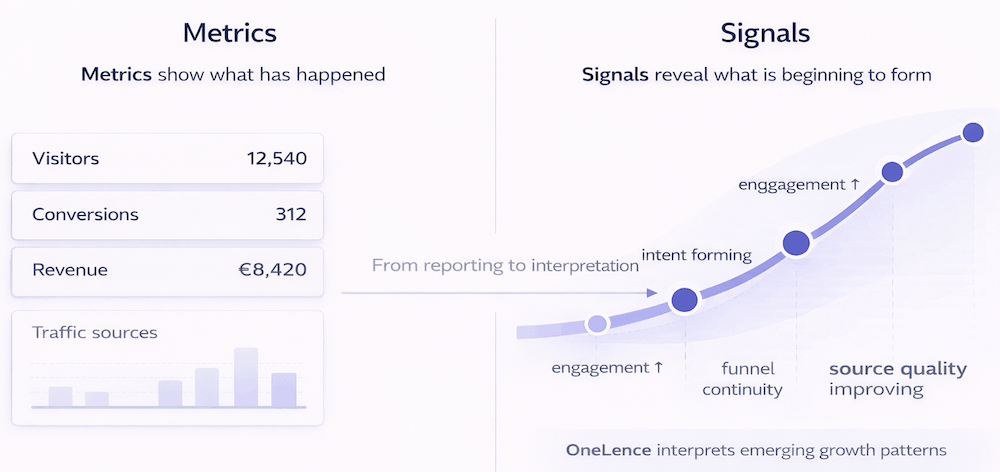
Marketing dashboards usually present metrics such as visitor numbers, conversion rates, or revenue totals. These figures are important, but they often represent isolated outcomes from a specific moment in time.
Signals, in contrast, reflect developing patterns in user behaviour and performance movement. They help you understand whether growth momentum is starting to build, stabilise, or weaken.
OneLence focuses on identifying these signals so that you can evaluate progress before results become fully mature.
What Metrics Show
Metrics typically answer factual questions about past activity, for example:
- how many users visited your website
- how many conversions were recorded
- how much revenue was generated
- which channels delivered traffic
These numbers provide a snapshot of performance.
However, snapshots alone may not explain whether growth direction is improving or declining.
What Signals Reveal
Signals help you interpret performance development over time.
Instead of looking only at totals, OneLence evaluates patterns such as:
- increasing engagement from specific traffic sources
- gradual improvement in funnel continuity
- emerging behavioural consistency across campaigns
- early indications of conversion intent
These patterns provide context for understanding how performance may evolve.
Note: A period with low conversions can still contain positive signals, such as stronger engagement or improved traffic quality.
Why This Difference Matters
Focusing only on metrics can lead to premature decisions, especially during early campaign stages or growth experiments.
By observing signals, you can:
- detect meaningful change earlier
- reduce overreaction to short-term fluctuations
- align actions with developing momentum
- build more structured decision confidence
In the next section, you will learn how to read growth patterns over time and understand why trajectory is more important than isolated data points.